Skip to content
View in the app

A better way to browse. Learn more.

PDS Geosciences Node Community

A full-screen app on your home screen with push notifications, badges and more.

To install this app on iOS and iPadOS
  1. Tap the Share icon in Safari
  2. Scroll the menu and tap Add to Home Screen.
  3. Tap Add in the top-right corner.
To install this app on Android
  1. Tap the 3-dot menu (⋮) in the top-right corner of the browser.
  2. Tap Add to Home screen or Install app.
  3. Confirm by tapping Install.
  • Search By Tags

    Search will match any tag entered
  • Search By Author

Content Type

Forums

  • PDS Geosciences Node
    • Announcements
    • For data providers
    • For data users
  • PDS Geo Tools
    • Analyst's Notebook
    • ODE - Orbital Data Explorer
    • Spectral Library
  • Workshops
    • MRO/CRISM Data Users' Workshop 2012

Categories

  • Data user tools

Blogs

  • Working with PDS data
  • Using the Analyst's Notebook

Find results in

Find results that contain...

Date Created

  • Start

    End

Last Updated

  • Start

    End


Filter by number of...

  • Minimum number of comments

  • Minimum number of replies

  • Minimum number of reviews

  • Minimum number of views

Found 2 results

  1. Hello all, Most of the LROC CDRNAC products has both '.img' and '.tif' files. I am assuming that both the files contain images of the same region but the '.img' files have meta data. I have observed that '.img' are typically 300MB and '.tif' files are 30MB in size. I have the following two questions, 1. Why is the '.img' file typically 10 times larger than the '.tif' files ? Is the meta data some huge in size? 2. Some products, for example M1185002263RC does not have a 'tif' file. Is it not available for some products? I am actually creating a mosaic area of 10x10 Km using LROC images of 1.5m/pixel resolution (approx) by stitching them together. I am using MATLAB for this purpose and it can only read '.tif' files. Any help or suggestion would help me in moving forward. Thank You, Shyam.
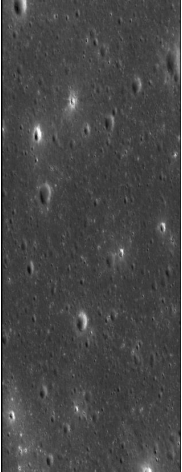
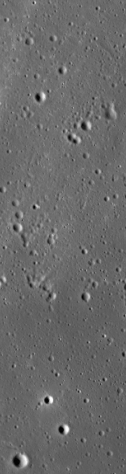
  2. Hello all, As per the definition of Emission angle given in http://ode.rsl.wustl.edu/moon/pagehelp/quickstartguide/index.html?seach_page.htm#filterbyanglerange, higher values of emission_angle indicate more oblique viewing. Consider the two LROC products M1099037220LC and M1108467737LC with a very close emission angles of 1.78 deg and 1.76 deg respectively. However M1099037220LC appears to be very oblique with elliptical shaped craters and M1108467737LC appears to be nadir looking with almost circular craters. Can you please explain why is it so ? The screenshot of the LROC images are attached for you reference. Thank You, Shyam.
Account

Navigation

Search

Search

Configure browser push notifications

Chrome (Android)
  1. Tap the lock icon next to the address bar.
  2. Tap Permissions → Notifications.
  3. Adjust your preference.
Chrome (Desktop)
  1. Click the padlock icon in the address bar.
  2. Select Site settings.
  3. Find Notifications and adjust your preference.